Persistent slow drains, frequent toilet clogs, and sinks backing up can indicate more than a one-time obstruction. When a line is snaked, the immediate blockage is often cleared, but repeated backups can return if the underlying cause remains in place. A common reason drains keep clogging after snaking is tree root intrusion. Roots naturally seek moisture and can enter sewer and drain lines through joints and connections in PVC pipe, as well as through openings created by corrosion in older cast-iron systems. Over time, cracks, pinholes, or separated joints can create entry points where roots begin to grow into the pipe. Cutting or snaking roots out of the line may restore flow, but it does not necessarily prevent regrowth. Once roots are established, they can return through the same gaps, leading to a repeating cycle of blockage, clearing, and blockage again. In that situation, the issue is often not the effectiveness of snaking, but the fact that the pipe still has access points that allow intrusion. When clogs become frequent, some recommendations shift toward pipe replacement, which may involve excavation, breaking floors, or tunneling in under-slab situations. These approaches can be disruptive and are typically considered when a pipe is not a good candidate for rehabilitation.
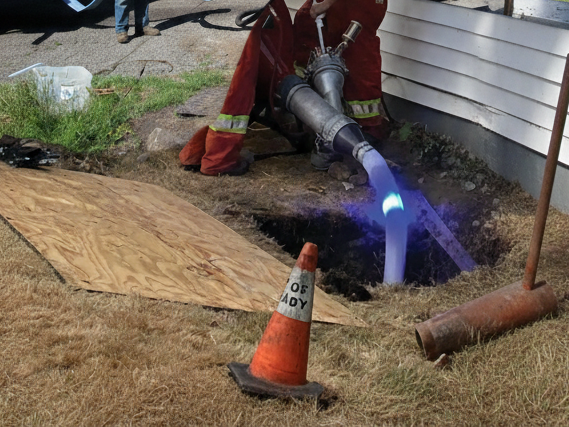
The process typically begins with an inspection to confirm the cause of backups and to evaluate whether the pipe can be lined. Video inspection is commonly used to locate intrusion points, corrosion, cracks, offsets, or collapsed sections. The inspection also helps determine whether a blockage is localized or part of a broader condition along the line. If lining is appropriate, the line is cleaned to remove roots, debris, and scale so the liner can bond to the interior surface. Cleaning methods vary based on pipe material and condition, but the objective is consistent: restore internal clearance and prepare a stable surface. After preparation, a resin liner is installed from available access points and cured in place to form a hardened interior layer. A follow-up inspection is then used to verify that the line is open and the lining is continuous. Where backups were driven by repeated root entry at joints, the sealed interior can reduce the likelihood of rapid regrowth through the same locations.
When snaking provides only short-lived relief, the outcome of a more durable repair approach is typically measured by whether the line remains clear without repeated interventions. In cases where tree roots are repeatedly entering through joints or corrosion openings, sealing those access points is often the practical difference between temporary clearing and longer-term stability. Trenchless lining is not a replacement for all situations. Pipes that are collapsed, severely misaligned, or structurally unsound may require replacement. However, when a pipe is suitable for rehabilitation, lining can reduce repeat clogs by addressing the re-entry mechanism that makes root cutting a recurring expense.