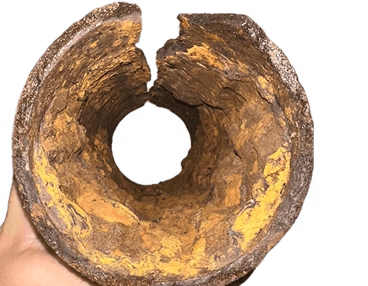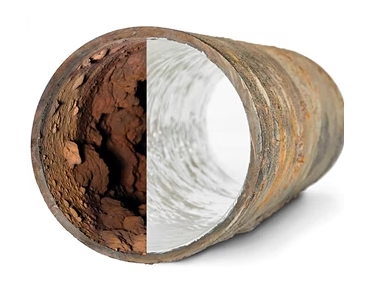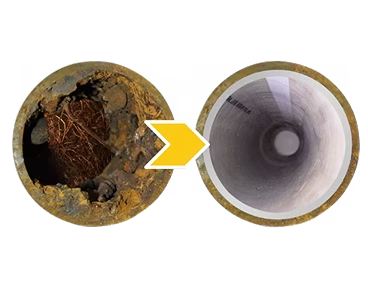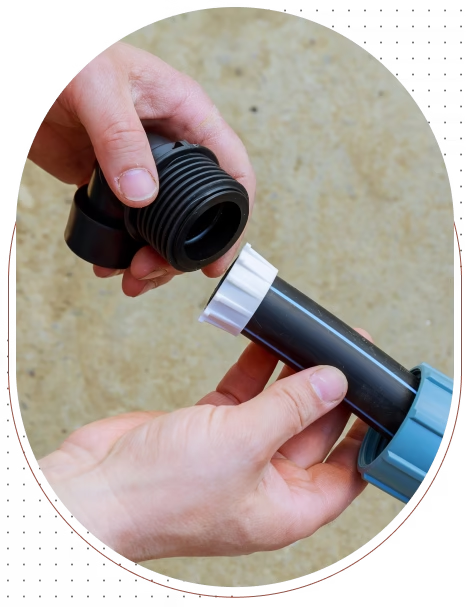
When drain cleaning provides only temporary relief — days or weeks rather than months — the inside surface of your cast iron pipe has developed the rough, corroded texture that traps debris regardless of how often the line is cleared. In Clearwater’s salt-influenced soil environment, this internal roughening accelerates faster than in inland cities, and it progresses toward full structural failure if the underlying corrosion isn’t addressed at the source.
One of the most common and frustrating complaints from Clearwater homeowners is a persistent sewer smell they can’t trace to any visible drain problem. Many Clearwater homes built over multiple decades have undergone partial replumbing — adding new copper or PVC sections to original cast iron runs — and the transition joints between these different materials are a frequent source of sewer gas leaks. These joints aren’t failed drains; they’re structural seam failures that emit gas without causing backups. Pipe lining that coats and seals the full interior, including these transition zones, often resolves odor problems that have stumped multiple plumbers.
Clearwater’s sandy coastal soil drains quickly under normal conditions, but during significant rainfall events, the water table rises and pushes against buried sewer laterals from every direction. Pipes with compromised joints or minor cracks take on groundwater under this pressure, reducing their effective flow capacity and producing the characteristic gurgling sound that indicates a partial main line blockage. If this symptom tracks with the rainy season or follows specific storm events, your lateral has a structural breach — not a debris clog.
In Clearwater’s high-humidity Gulf Coast climate, a sub-slab drain pipe leak creates mold-conducive conditions faster than almost anywhere else in Florida. Moisture appearing at baseboard level, musty odors in rooms above drain runs, or mold appearing on baseboards without an obvious water source are all indicators of a sub-slab pipe leak — one that in Clearwater’s climate can progress from a small seepage to a significant mold situation within days, not weeks.
For Clearwater Beach vacation rental owners and condo managers, recurring guest complaints about slow drains, sewer smells, or drain backups represent both a pipe problem and a revenue problem. A single bad review citing plumbing issues can affect bookings for months. Traditional excavation, which requires displacing guests and shutting down a rental property for weeks, compounds the financial damage. Trenchless lining — completed in 3 to 4 days without displacing anyone — is the only repair method that addresses the problem without creating a second one.
If your Clearwater home was built during the city’s primary growth era — the 1960s through the early 1980s — and has never had a sewer camera inspection, the condition of its cast iron drain lines is unknown. In Clearwater’s coastal environment, cast iron pipes from this era have been exposed to decades of salt-influenced groundwater, humid acidic soil, and seasonal water table fluctuations. A camera inspection is the only way to see what’s actually there.