If a plumber has told you your sewer line collapsed, or that it’s back-pitched, or has a belly that lining can’t fix, and handed you a quote to dig up your floors, you’re allowed to ask for proof before you sign.
Most South Florida plumbers are honest and will hand it over without hesitation. The ones who won’t are telling you something important.
Here’s what proof actually looks like, and where the diagnosis most often goes wrong.
The single most common misdiagnosis: a belly that isn't a belly
This one is worth reading first, because it is the diagnosis that most often turns a repair into a replacement.
We have inspected a lot of pipes that were called bellies and turned out to be something else entirely. Here is what is actually happening on the screen.
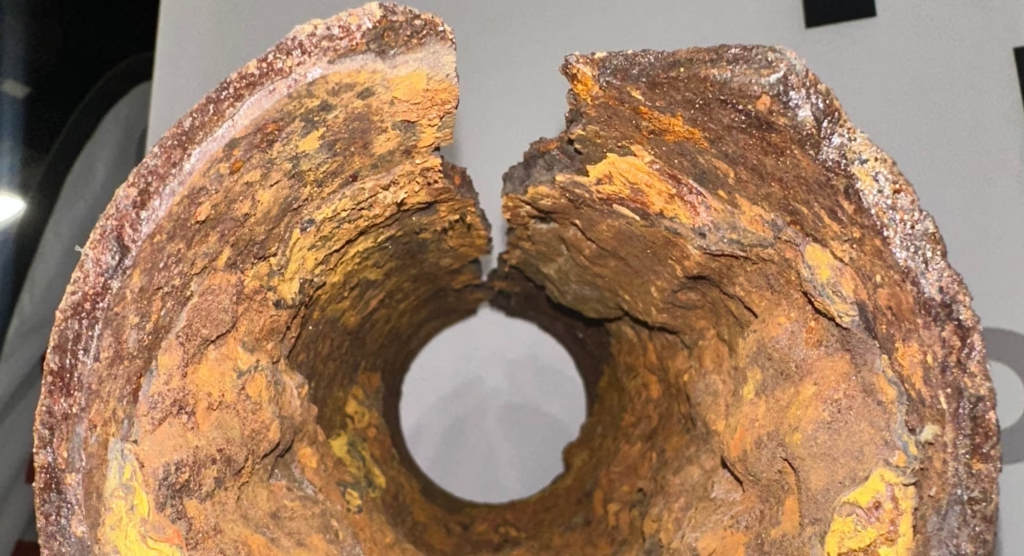
The bottom of a cast iron pipe rusts through first, because that’s where water constantly flows. Over decades a channel forms along the bottom of the pipe, and water pools in that channel. Now send a camera down. The lens rides about a quarter-inch above the pipe floor. It dips into the standing water and the screen goes black.
To an inexperienced eye, that black screen means a belly, a sagging section where water can’t drain. To someone who does this every day, it’s a corroded channel in a pipe.
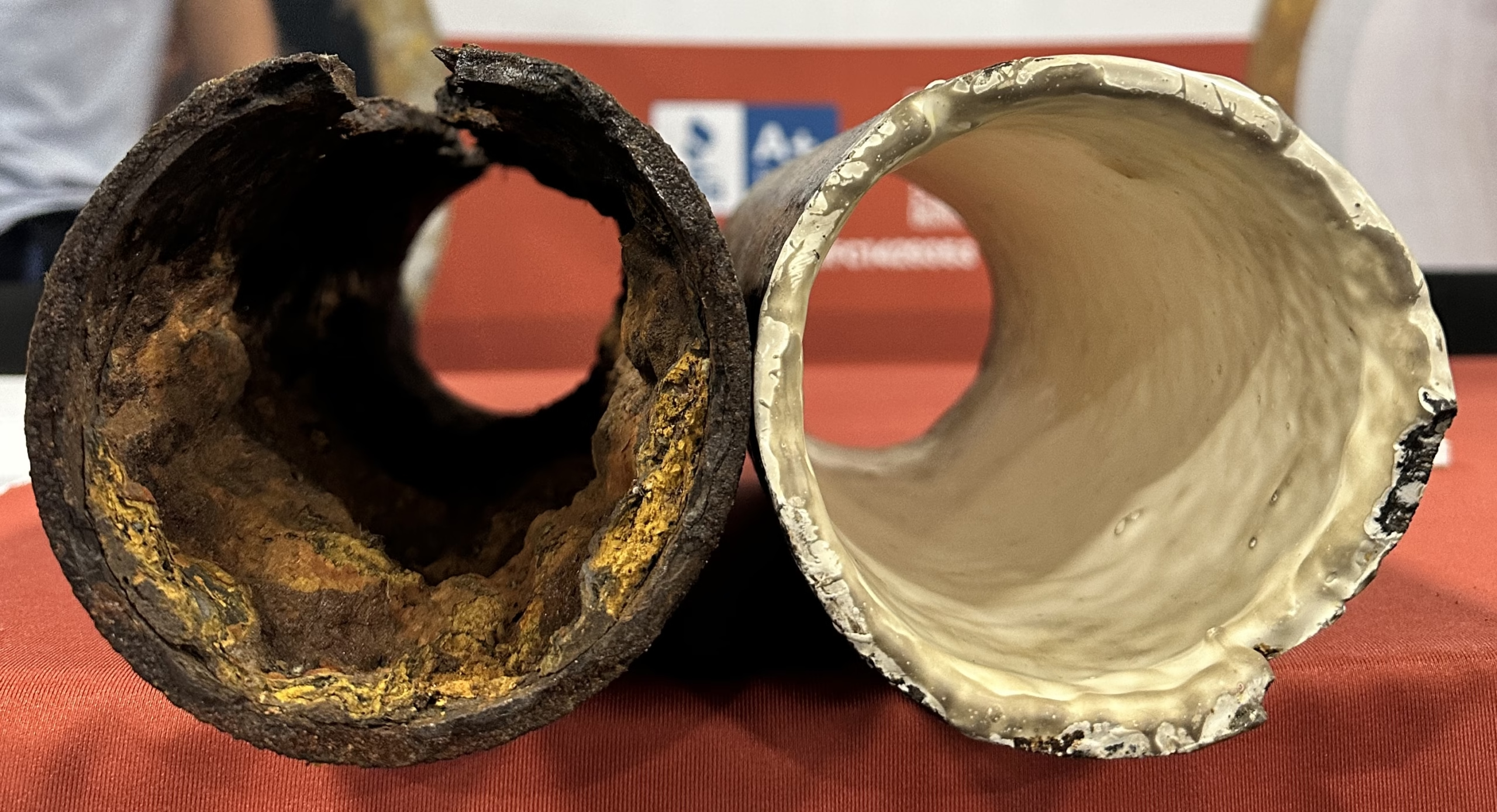
The difference in the two diagnosis is enormous. A genuine belly or back-pitch is a slope problem, and lining can’t fix slope, so that section needs replacement, which means opening your floor. A corroded channel is a pipe wall problem, and lining fixes it completely without excavation.
Same black screen. Two wildly different jobs, and two wildly different invoices.
If someone has diagnosed a belly from a quick camera pass, that’s the diagnosis to get verified first. If there’s a real pitch problem, we’ll be honest and tell you while still onsite. But it’s worth confirming before you agree to demolition because it gets misdiagnosed so often.
Why you may not have been offered lining at all
There’s a structural reason replacement gets quoted so often, and it has nothing to do with your pipe.
Most plumbing companies don’t line. The equipment is expensive, and the technique carries a learning curve of two years or more before a crew is genuinely reliable at it. A company that doesn’t line can only sell you what they the offer: a repipe.
Lining is what we have specialized in for the last 23 years. We know what to look for, when lining is the right option for your home, and when your system requires a full repipe. If nobody has walked you through lining as a possibility, it’s worth asking whether that’s because your pipe can’t take a liner, or because the person quoting you doesn’t install them.
The distinction is worth confirming, because the two answers are separated by roughly half the cost of the job.
"Collapsed" is a specific word. Make sure it's the right one.
Several different pipe conditions produce identical symptoms (backups, slow drains, gurgling) at very different price points.
Blockage. Grease, roots, or debris in an otherwise sound pipe. Clears with cabling or hydro jetting. Cheapest fix by far.
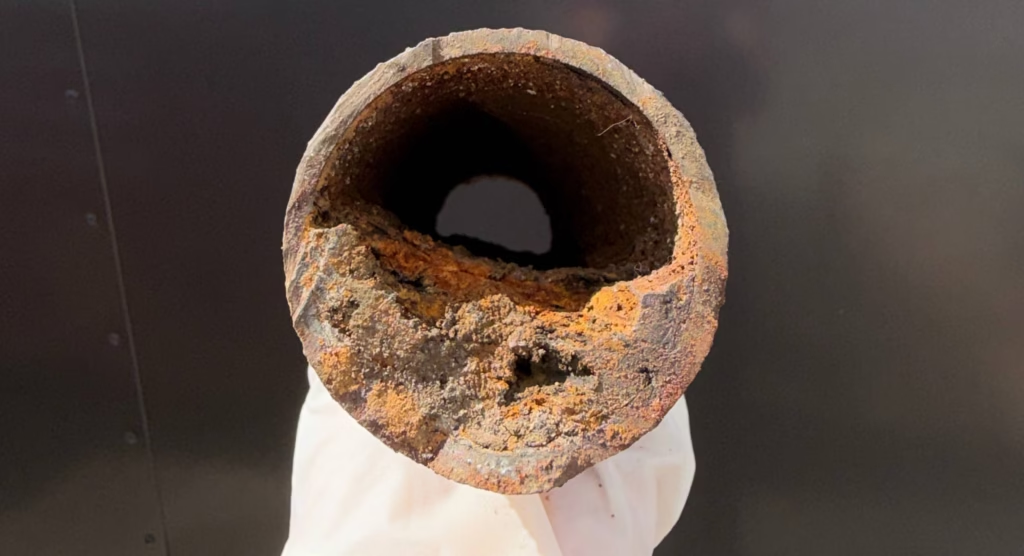
Scale and corrosion buildup. Interior wall rough and narrowed, flow restricted, pipe structurally intact. Cleaning plus lining.
Channeling. The bottom of the cast iron has corroded away. Extremely common in South Florida homes built before the mid-1970s. Serious, but an excellent lining candidate, because the pipe is still there.
Root intrusion. Roots entering through open joints and cracks. Lining seals the joints roots enter through, since the new pipe is seamless and jointless.
Offset joint. Sections shifted out of alignment. Depending on how far, often still linable.
Belly or back-pitch. A genuine slope failure. Requires replacement of that section. See above regarding how often this is called incorrectly.
Collapse. Structural failure with the passage blocked by the pipe itself. Real, and it does happen. Requires access to that section.
Only the last two justify a replacement-level price. So the question isn’t “am I being lied to.” It’s “which of these seven is it, and can you show me?”
What the camera footage has to show
Real diagnostic footage includes:
- A visible distance counter. Professional sewer cameras have one. It tells you the defect is 42 feet from the access point, not somewhere unspecified. Footage without a counter is a picture, not evidence.
- The approach. You should see the camera travel down the line and reach the problem, not start at it. The rest of the pipe is context you need.
- The defect itself, clearly. In a true collapse, the camera stops because it physically can’t pass. You’ll see that.
- A location for the defect. Most professional camera heads carry a small transmitter that lets the technician stand above ground and mark the spot and depth. This matters most when someone is proposing to dig: if nobody can tell you where the failure is, nobody can tell you what it costs to reach it.
Red flags
- They won’t share the footage, or “the camera didn’t record.”
- Footage with no distance counter, or a dig quote with no marked location. The counter tells you how far down the line the problem sits. If they intend to excavate, they should also be able to mark the spot and depth in your yard, because that is what sets the price.
- A belly diagnosed on a single quick pass, with no attempt to clear standing water or re-run the line.
- The quote drops significantly if you sign today. Real pricing doesn’t work that way.
- Excavation presented as the only option, with lining never mentioned or dismissed without explanation.
- No permit mentioned. Sewer replacement generally requires a permit in South Florida jurisdictions, pulled by a licensed contractor. Most pipe lining projects do not require permits – but it depends on the local regulations.
- No license number on the estimate. Verify any Florida plumbing contractor for free at myfloridalicense.com.
- Money demanded up front. Nobody should collect before work has been started.
- They discourage a second opinion. Confident diagnoses survive a second evaluation.
Green flags
- The footage arrives before you ask for it.
- They walk you through it and point at specific things on screen.
- They distinguish clearly between what has failed and what has merely aged.
- They present more than one option with honest trade-offs, including the cheaper one.
- The estimate breaks out footage, method, access points, and warranty.
- License number and permit responsibility stated in writing.
- They’re comfortable with you getting a second opinion.
Five questions to ask, word for word
- “Can you send me the camera footage with the distance counter visible?”
- “How many feet from the access point is the failure, and how deep?”
- “Is this a collapse, a true back-pitch, or channeling with standing water? Show me on the video.”
- “Can this line be lined, and if not, specifically why not?”
- “What’s your license number, and who pulls the permit?”
Why this comes up so often in South Florida
Homes across Miami-Dade, Broward, and Palm Beach built before the mid-1970s are largely on original cast iron drain lines, now well past their 50-to-75-year service life. Conditions here accelerate everything: a high water table keeps the outside of the pipe wet, humidity and salt air work on the metal, and ficus, banyan, and oak roots chase any moisture escaping a joint.
So the underlying problem is usually real. Something genuinely is wrong. That’s precisely why the diagnosis deserves scrutiny. When a legitimate problem exists, it’s easy to attach a much larger repair to it than the evidence supports.
For context on what the honest version costs: trenchless lining typically saves 50 to 60% versus a full replacement, is priced per linear foot, and most residential jobs here are completed in about a day. If you’re holding a demolition quote, that’s the number worth comparing against.
Get a second camera in the line, free
We’ll run our own camera, hand you the recorded footage, and give you a written assessment of what we see. No charge, no obligation, no requirement that you hire us.
If the first diagnosis was right, you’ll know, and you can move forward with confidence instead of doubt. If it wasn’t, you’ll have documentation of what the line actually needs.
Either way, you stop guessing.
We'll hold ourselves to the same standard
It would be a strange thing to write this article and then ask you to take our word for anything. So, plainly:
If your line is too far gone to take a liner, we will tell you at the inspection. Some pipes genuinely need replacement, and saying so costs us the job. We say it anyway, because the alternative is installing a liner that fails and gets dug out later, which costs everyone far more.
We are also not going to be your cheapest quote, and we’d rather explain that than pretend otherwise. We use Perma-Liner, which costs us more than the alternatives, for a specific reason: it’s the only system with a patented double-balloon design, so if one balloon ever leaks during installation the safety balloon supports the liner instead of letting it collapse inside your pipe. No other manufacturer has it.
Every installer on your property is a full-time employee on our payroll. We don’t subcontract.
And you don’t have to take any of that on faith. We keep hundreds of residential and commercial references, with names and phone numbers, updated monthly, and we send them with your estimate so you can call them. That list includes work for the U.S. Navy, Disney, the U.S. Air Force, Coca-Cola, Pepsi, and the Hilton hotel chain.
Request a free second-opinion camera inspection → or call (954) 799-4982.
Blueprint Plumbing LLC DBA Trenchless Pipe Lining · State-certified plumbing contractor · CFC1429353 · BBB A+ accredited · Founded in Florida 23 years ago · We line 6 to 8 homes a week in Florida · Serving Miami, Fort Lauderdale, Hollywood, Pembroke Pines, Pompano Beach, Boca Raton, West Palm Beach, Tampa, St. Petersburg, Clearwater, Sarasota, Naples, and Orlando.