

Sewer and drain lines that run beneath a concrete slab can develop recurring problems that show up as slow drains, frequent clogs, toilets that back up, or sink and shower backups. A short-term cleaning (such as snaking) may improve flow temporarily, but it does not always address the underlying cause.
One common driver of repeat blockages is tree root intrusion. Roots naturally seek moisture and can enter through joints, connections, or small openings in aging lines. This can happen with PVC at joints and fittings, and it can be more pronounced in corroded cast-iron lines where cracks or pinholes form over time. As roots grow inside the pipe, they can narrow the passage and eventually obstruct flow, leading to repeated service calls.
When backups become frequent, traditional recommendations often include full pipe replacement. For lines under a slab, that can mean breaking interior floors and concrete to reach the pipe, or tunneling beneath the foundation. Both approaches can be disruptive and may introduce secondary concerns such as dust, extended downtime, and the challenges of restoring a stable base after excavation or tunneling.
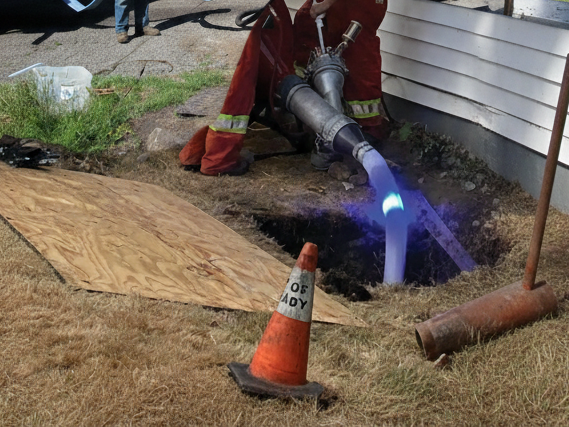
Trenchless epoxy pipe lining is a method designed to restore the interior of an existing sewer or drain line without requiring continuous excavation along the pipe’s path. The goal is to create a new, sealed surface inside the old pipe, reducing pathways for infiltration and limiting the gaps that allow roots to re-enter.
Because lining forms a continuous interior layer, it can address recurring root intrusion by sealing joints and small defects that roots exploit. Instead of repeatedly cutting roots only for them to return, the lined pipe is intended to reduce recurrence by removing access points. This approach is commonly considered when the pipe structure is suitable for rehabilitation rather than replacement.
For additional context on trenchless lining as a service, see the epoxy pipe lining page: https://trenchless-pipe-lining-south-florida.com/epoxy-pipe-lining/.
A typical trenchless lining project begins with an inspection to confirm the source of the problem and evaluate pipe condition. Video inspection is commonly used to locate root intrusion, offsets, cracks, corrosion, or other restrictions, and to determine whether the line has sufficient structural integrity for lining.
If lining is appropriate, the line is cleaned to remove roots, scale, and debris so the liner can bond properly. Cleaning methods vary by pipe material and condition, but the purpose is consistent: restore a clear path and prepare the surface for a resin-based liner.
The liner is then installed through existing access points (such as cleanouts) and cured in place to form a hardened interior layer. After curing, a follow-up inspection verifies continuity and confirms that the line is open and properly sealed. In slab scenarios, this workflow can reduce the need for extensive interior demolition because the work is performed through targeted access rather than trenching along the full run.
For slab sewer line repair, the primary outcome of trenchless epoxy pipe lining is reduced disruption compared with full replacement methods that require breaking floors or tunneling under the foundation. By rehabilitating the existing pipe from access points, the approach can limit demolition and shorten the period when plumbing is out of service.
In situations driven by recurring root intrusion, lining focuses on preventing repeat entry by sealing joints and small openings that allow roots into the line. This can reduce the cycle of repeated cutting and recurring backups when the pipe is otherwise a candidate for rehabilitation.