


Hurricane Season Is Here. Your Pipes Are Not Ready.
Hurricane season officially started June 1 and runs through November 30. If you live in South Florida, you’ve probably already done the usual storm prep – generator checked, shutters tested, supplies stocked. But there’s one part of your home that almost nobody thinks about until it fails: your sewer pipes.
If your home was built before 1975 – and most Miami, Coral Gables, Fort Lauderdale, Hollywood, Hialeah, and Boca Raton homes from that era qualify – there’s a very good chance you have cast iron drain pipes underground. And cast iron, after 50+ years of South Florida heat, humidity, and salt air, is uniquely vulnerable during hurricane season.
This is the part of your storm preparation that’s worth doing now, before a storm forms in the Gulf or off the coast of Africa.
The Short Answer
Hurricane season puts three kinds of stress on aging cast iron sewer pipes:
- Saltwater intrusion that accelerates already-active corrosion
- Ground saturation and storm surge that pressurize pipes from outside
- Sewer system overloads that cause backflow into homes
Pipes that survive normal conditions can fail under all three at once. The good news: trenchless pipe lining can be installed in 3 to 4 days, fully protecting your sewer system from the inside – before the next storm forms.
Why Cast Iron + Hurricane Season Is a Specific Problem
Hurricane season doesn’t damage every plumbing system equally. Cast iron is in a category of its own for three reasons.
- The corrosion is already there.
Cast iron pipes corrode from the inside out, particularly at the bottom where water sits. Your home’s cast iron pipes have likely been thinning for decades – there’s a “channel” forming along the bottom of the pipe, and the wall thickness has dropped well below what it was when the home was built. That makes the pipe far more vulnerable to any additional stress. For a deeper look at this mechanism, see our companion guide, How Cast Iron Pipe Corrosion Causes Sewer Backups-And the Trenchless Pipe Lining Solution.
- Saltwater accelerates corrosion dramatically.
When storm surge or flooding pushes saltwater into the ground around your pipes – or, in worse cases, directly into your home’s plumbing system – it dramatically accelerates the corrosion process. Chloride ions in saltwater attack iron several times faster than freshwater. A cast iron pipe that might have lasted another five years could fail much sooner after a major storm event.
- Ground saturation pressurizes pipes from outside.
South Florida already has a high water table. During heavy rainfall, the soil surrounding your sewer pipes becomes fully saturated, and groundwater pressure rises significantly. That pressure pushes against the pipe wall from the outside. A pipe with intact wall thickness can handle it. A pipe with corroded, thinned-out walls might not.
What Actually Goes Wrong During Hurricane Season
Here’s what we see most often in South Florida homes during and after major storms:
Sewer backups. When the municipal sewer system is overwhelmed by heavy rainfall, wastewater has nowhere to go. It backs up through the path of least resistance – your home’s drain lines. If your cast iron has cracks or holes, sewage doesn’t just back up into tubs and floor drains; it can leak directly into the soil under your slab.
Slab water intrusion. A cracked or broken pipe under your slab during heavy rain becomes an entry point for water – and contaminated sewage – to enter the home from below. This is one of the worst-case scenarios because the damage is often hidden until mold and structural issues become obvious weeks later.
Sudden pipe failures. The combination of saltwater corrosion, ground pressure, and a sewer system surge can be enough to push an already-weakened pipe past failure. Pipes that “held” through previous seasons sometimes don’t hold through this one.
Why “Fix It Before the Storm” Beats Emergency Repair
Once a hurricane is in the forecast, your options narrow dramatically:
- Plumbers get booked solid. Every trenchless and traditional plumber in South Florida fills their schedule before and after major storms. Getting on a calendar in days, not weeks, becomes nearly impossible.
- Excavation in saturated ground is significantly harder. Traditional dig-and-replace work becomes more complex and more expensive in wet conditions – often delaying repairs past when you can actually live in the home.
- Insurance gets complicated fast. Most policies have a 72-hour window for reporting damage, and Florida insurers frequently challenge cast iron claims by arguing the damage was gradual rather than sudden. Pre-storm documentation makes claims dramatically easier to defend.
- Damage compounds. A small backup left untreated for days during a storm becomes a major mold and structural problem.
By contrast, trenchless pipe lining in dry conditions takes about 3 to 4 days, with no excavation, and is fully done well before the next system forms.
What You Can Do Right Now
If you live in a pre-1975 South Florida home and you haven’t had your sewer line inspected recently, this is one of the highest-value plumbing investments you can make heading into hurricane season:
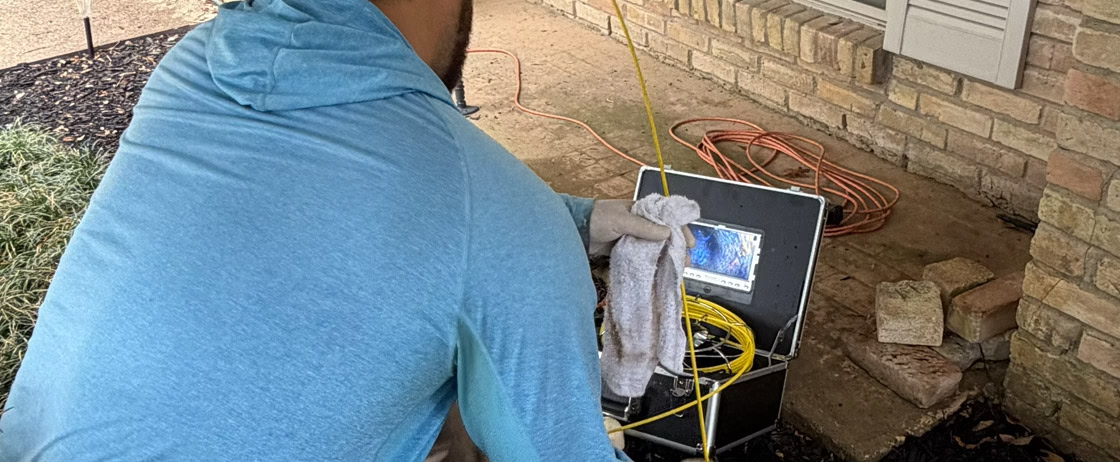
- Schedule a video camera inspection. A camera goes through your line and shows you exactly what shape your pipes are in. We document it on video, so you have the footage if you ever need to file an insurance claim later.
- Get your line lined if needed. If the inspection shows corrosion, cracks, channeling, or scale buildup, trenchless cast iron pipe lining or epoxy pipe lining seals the inside of the pipe and adds 50+ years of protected service life – no digging, no slab work, no landscaping damage.
- Consider a backflow preventer. A backflow prevention valve installed on your sewer line prevents municipal sewer overload from forcing sewage back up into your home during a storm event.
For more on how long your existing cast iron will realistically last, see our companion guide, How Long Do Cast Iron Drain Pipes Last in South Florida-And Why Do They Keep Backing Up?.
Why Trenchless Lining Is Especially Well-Suited for Storm Season
There are practical reasons trenchless lining is the right approach for hurricane-season preparation:
- 3 to 4 days, total. Most full trenchless installations complete in less time than it takes a tropical storm to form, track, and arrive.
- No excavation. Florida’s high water table makes traditional excavation expensive and slow at any time of year. During wet season, it’s even harder.
- Permanent fix. The new liner is sealed and structural – it doesn’t degrade further with storm-season conditions. Cured epoxy is chemically inert against acids, alkalines, and even saltwater.
- 50-year transferable warranty. Whatever happens with future storm seasons, your sewer line is documented and protected for the lifetime of your home.
Frequently Asked Questions
Can a hurricane actually break my sewer pipes?
Directly, no – hurricanes don’t reach underground pipes. But the secondary effects (saltwater intrusion, ground saturation pressure, and sewer system overload) can push already-weakened cast iron pipes past failure. Pipes that survive normal conditions sometimes don’t survive a major storm.
My pipes have made it through previous hurricanes. Aren't they fine?
Not necessarily. Cast iron corrodes continuously, so each season your pipes are in worse shape than the last. A pipe that held through 2024 might not hold through this year. The only way to know is a video camera inspection.
If a pipe fails during a hurricane, will insurance cover it?
Sometimes – but it’s complicated. Florida insurance companies often deny cast iron failure claims by arguing the damage was gradual (not covered) rather than sudden (covered). Documented video inspections and pre-storm repairs make insurance claims significantly easier to defend.
Should I wait until after this hurricane season to fix my pipes?
That’s the riskiest path. If your pipes fail during or after a storm, you’re competing for emergency contractors, dealing with saturated ground for excavation, and fighting insurance complications. Most homeowners who wait end up paying more, dealing with more damage, and having less control over the process.
How long does trenchless lining take?
Most residential trenchless lining jobs are completed in 3 to 4 days. We give you a final video recording of the lined pipes, your paid invoice, and your 50-year transferable warranty – all in one email – once the work is finished.
Does trenchless work even when the pipe is already badly corroded?
In most cases, yes. As long as the pipe still holds its general shape (even if it’s heavily rusted, channeled, or cracked), trenchless lining can restore it.
Get Ahead of the Next Storm
Cast iron pipes don’t get stronger over time, and hurricane season puts more stress on them than any other time of year. The best time to deal with aging pipes is before there’s a tropical storm on the radar – not after.
A free video camera inspection takes about an hour and tells you exactly what shape your pipes are in. If they need to be lined, we can have the work done in 3 to 4 days – fully documented, fully warrantied, and fully protected before the next storm forms.
📞 Call (954) 799-4982 or request a free estimate. We’ll get a camera through your line, show you what’s actually happening underground, and help you make a confident decision about what to do before hurricane season picks up.