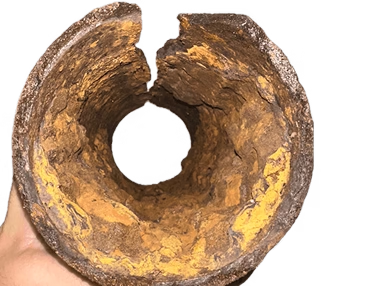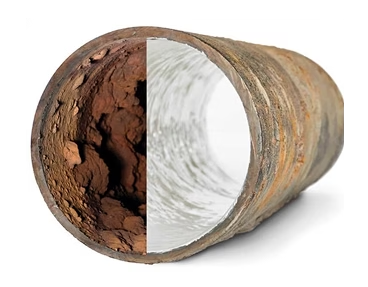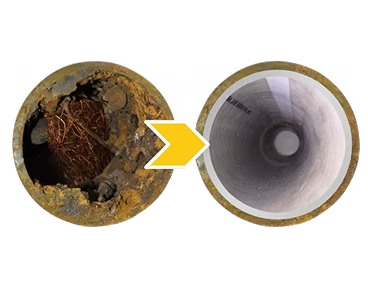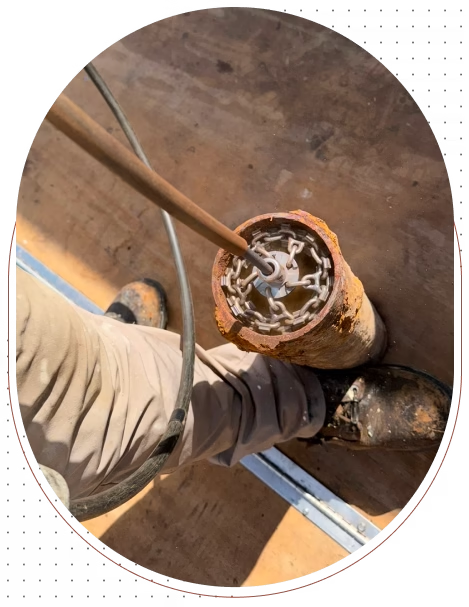
The most common sign of failing cast iron in West Palm Beach homes is sewage backing up into low-level fixtures — often within weeks of a professional cleaning. Corroded cast iron develops razor-edged interior cracks that catch debris regardless of how often the line is cleared.
In West Palm Beach’s older neighborhoods, persistent sewer smells often indicate cracks or separated joints in the cast iron beneath the slab. In Palm Beach County’s subtropical climate, a sub-slab sewer leak can create mold-favorable conditions within 24 to 48 hours.
When more than one bathroom or fixture drains slowly at the same time, the blockage is in the main lateral. In West Palm Beach’s pre-1972 homes, this almost always means internal cast iron corrosion and scaling have reduced the pipe’s effective diameter.
A band of noticeably greener, faster-growing grass that tracks directly above a buried sewer line is one of the clearest signs of an active lateral leak. West Palm Beach’s sandy soil fertilizes rapidly from even a slow sewage seep.
West Palm Beach’s Intracoastal waterfront neighborhoods experience the highest groundwater chloride levels in Palm Beach County. Sewer smells near docks, seawalls, or outdoor areas in these neighborhoods often indicate cast iron that has been salt-corroded through to a crack.
West Palm Beach’s most beloved historic neighborhoods have the oldest residential pipe infrastructure in Palm Beach County. A camera inspection is the most important maintenance call these homeowners can make.