


The Seller's Dilemma
If you’re preparing to sell a South Florida home built before 1980, you probably already know — or are about to find out — that you may have cast iron drain pipes under the slab. And you’ve probably been told it’s a problem.
It is. But it’s a manageable one, and how you handle it before you list determines whether you net top dollar or absorb a discount you didn’t have to take.
This guide walks through what Florida law requires you to disclose, the three options sellers actually have, and why a growing number of South Florida sellers are choosing to address cast iron before the listing photos are taken — using a method most realtors weren’t familiar with even five years ago.
The Short Answer
Florida law requires you to disclose known cast iron pipe problems — including failing pipes, prior water damage, or completed repairs — even on an “as-is” sale. The most cost-effective way to remove the issue from the buyer’s concern list is pre-listing trenchless pipe lining, which renews the entire drain system in 2–3 days for roughly half the cost of excavation, and comes with a 50-year transferable warranty that conveys to the buyer at closing.
Sellers who handle cast iron before listing typically protect their sale price. Sellers who wait usually face either lowball offers, repair credits that exceed the actual fix cost, or canceled contracts after inspection.
Why Cast Iron Is Specifically a Florida Selling Problem
A few facts that anchor the issue:
- Nearly 40% of Florida homes were built before 1975 — the era when cast iron drain piping was standard.
- Cast iron in Florida can begin corroding within 25–30 years due to salt-laden soil, high groundwater, and humidity — far faster than the 80–100-year lifespan once predicted.
- That means homes built between roughly 1950 and 1980 in coastal South Florida are at peak failure risk right now. See our full breakdown of how long cast iron underground pipe lasts and what causes it to deteriorate.
Buyers know this. Buyer’s agents know this. Home inspectors know this. And insurance carriers know this — which means a 4-point inspection (required for most Florida homeowner policies on homes 30+ years old) will flag old plumbing systems and may affect the buyer’s ability to insure your home after closing.
Cast iron pipes are no longer a hidden problem you can hope a buyer overlooks. They’re the first thing inspectors look for in pre-1980 South Florida homes.
Florida Law: You Have to Disclose
Florida is a “non-disclosure with exceptions” state — meaning sellers don’t have to volunteer every detail, but they must disclose any known material defect that isn’t readily observable to the buyer. This standard comes from the 1985 Florida Supreme Court case Johnson v. Davis, and it has been applied to plumbing defects, water damage, and similar hidden conditions ever since.
Two myths to clear up:
Myth 1: “I’m selling as-is, so I don’t have to disclose.”
False. “As-is” means you won’t agree upfront to make repairs. It does not waive your obligation to disclose known defects. Florida courts have consistently held sellers liable under Johnson v. Davis even in as-is transactions. If you know about a problem, you have to tell the buyer.
Myth 2: “If I don’t know, I’m not liable.”
Mostly true, but with traps. Florida law requires disclosure of known defects. But once you’ve had a leak, a backup, an insurance claim, or a sewer scope inspection that revealed cast iron deterioration — you “know.” You can’t unsee what an inspection report shows. And if your insurance company has paid a claim related to a pipe failure, that’s documented; the buyer’s attorney will find it.
The legal stakes:
Florida sellers who fail to disclose known material defects can face lawsuits for fraud or misrepresentation, be forced to pay for repairs and damages after closing, or have the sale reversed entirely. Add the legal fees and time, and the cost of non-disclosure usually dwarfs the cost of fixing the pipes properly before listing.
The Three Options Sellers Actually Have
Once you know (or strongly suspect) cast iron is in the picture, you have three real choices:
Option 1: Disclose and absorb the price hit
Disclose the condition, sell at a reduced price, and let the buyer handle it. This is the simplest path but typically the most expensive one. Industry analyses suggest failing cast iron plumbing can reduce home market value by 20% or more, and buyers will usually negotiate against the higher of two contractor estimates — meaning you eat both the discount and the negotiation premium.
Option 2: Full excavation and PVC replacement before listing
Replace the entire cast iron system with PVC before putting the home on the market. For a typical 2,000-sq-ft Florida home (around 100 linear feet of pipe under the slab), this runs roughly $50,000–$70,000 and takes 2–3 months — during which floors are torn up, the slab is opened, and the home is largely unlivable. For most sellers on a listing timeline, this alone disqualifies the option.
Option 3: Pre-listing trenchless pipe lining
A new structural liner is installed inside the existing cast iron pipe — no excavation, no slab work, no flooring damage. For the same 2,000-sq-ft home, trenchless pipe lining typically runs about $17,000–$20,000 and completes in 2–3 days. The new lining is rated for 50 years and the warranty is transferable to the buyer at closing.
Why Option 3 Is the Smart Money for Most Sellers
The math, side by side:
| Option | Approx. cost (2,000 sq ft home) | Timeline | Disruption | Resale impact |
|---|---|---|---|---|
| Disclose + price discount | $0 upfront, $40K–$80K off sale | None | None | –20% or more |
| Full excavation + PVC | $50,000–$70,000 | 2–3 months | Severe (slab open, floors removed) | Neutral to positive |
| Pre-listing trenchless lining | $17,000–$20,000 | 2–3 days | Minimal | Positive |
Beyond the math, three things make pre-listing lining particularly effective for sellers:
- The buyer’s concern is gone.
With documented cast iron pipe lining and a transferable 50-year warranty, the buyer no longer has a plumbing problem to negotiate against. Their home inspector will see the work, your listing agent can include it in MLS notes, and the warranty document conveys at closing. Many buyers will value documented pipe restoration over an “as-is” credit — because the credit doesn’t guarantee they’ll have a working sewer line, the warranty does.
- The 4-point inspection becomes a non-issue.
For homes 30+ years old, Florida insurance carriers typically require a 4-point inspection covering roof, electrical, HVAC, and plumbing. Cast iron alone doesn’t automatically fail a 4-point, but it triggers underwriter scrutiny and sometimes higher premiums or denied coverage. Lined pipes are reported as restored and effectively remove plumbing as a 4-point concern. For more on how Florida insurance treats cast iron, see our guide to whether insurance covers cast iron pipes in South Florida.
- Your home shows better.
There’s no excavation evidence, no patched flooring, no fresh slab repair. Buyers walking through the home see a sound, ready-to-occupy property — not a recent construction zone.
Trenchless Lining as Pre-Listing Strategy: The Practical Timeline
If you’re planning to list in 8–12 weeks, here’s a realistic timeline:
Weeks 1–2: Camera inspection.
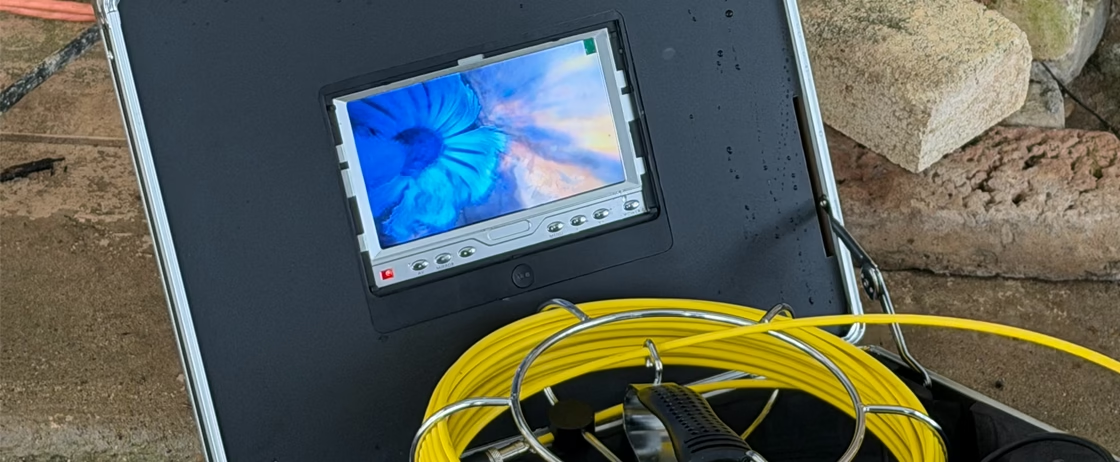
Schedule a video sewer camera inspection. This is the only definitive way to confirm whether your cast iron is failing, intact but worn, or already past the lining window. A camera inspection typically takes 1–2 hours.
Weeks 3–4: Decision and quote.
If lining is feasible (most pre-1980 systems are, unless pipes have collapsed entirely), get a written quote covering all under-slab drain lines. Confirm the warranty terms and transferability in writing.
Weeks 5–6: Installation.
Trenchless lining for a typical home takes 2–3 days. You can stay in the house during most of it; one day of limited drain use is usually the maximum disruption.
Weeks 7–8+: Listing prep and photos.
The home is ready to show, with documented plumbing restoration that you can disclose proactively — which is much better for sale price than disclosing a problem.
Decision Tree: What Your Sewer Camera Inspection Tells You
Based on what the camera shows, here’s how to think about your options:
If the pipes are in good condition (uncommon for pre-1980 homes):
Document the inspection. Disclose the home’s age, the pipe material, and the inspection results. Some buyers will still discount for cast iron presence alone, but you’ll have current evidence to push back against lowball offers.
If the pipes show moderate corrosion but no active failure:
This is the ideal lining candidate. Schedule lining as a pre-listing fix. You’ll convert a future buyer objection into a marketing asset.
If the pipes show severe corrosion or active leaks:
Lining may still be possible depending on wall integrity, but you also have a disclosure obligation for current and prior leaks. Talk to both a trenchless contractor and (depending on your situation) a real estate attorney about how to handle disclosure of past damage even after the pipes are restored.
If pipes have collapsed or have channel breaks too severe for lining:
You’ll need a hybrid approach — point repairs by excavation plus lining of the remaining sections. This is where pre-listing planning becomes most valuable, because handling it now beats handling it under buyer pressure two weeks before closing.
Frequently Asked Questions
Do I have to tell the buyer my Florida home has cast iron pipes?
Yes, if you know of any defects related to them. Florida sellers must disclose any known material defect that isn’t readily observable to the buyer under the Johnson v. Davis standard. Cast iron pipe material itself is not automatically a defect, but known deterioration, prior leaks, prior insurance claims, or completed repairs related to cast iron all qualify and must be disclosed.
Does selling “as-is” mean I don't have to disclose cast iron problems?
No. “As-is” only means you’re not agreeing upfront to make repairs. Your disclosure obligations under Florida law apply equally to as-is sales — and failing to disclose is one of the most common reasons as-is sales end up in post-closing litigation.
Will fixing the pipes actually increase my sale price?
Most listing agents would tell you: yes, indirectly. The fix doesn’t add the full cost of the work to the sale price as a line item. What it does is remove the buyer’s biggest discount lever and avoid the situation where a deal falls apart at inspection — which is more common than most sellers realize for pre-1980 South Florida homes. For a fuller analysis of the economics, see our piece on whether pipe lining is worth it and effective.
What about the warranty — does it really transfer to the buyer?
Yes. The standard trenchless pipe lining warranty is 50 years and transferable to subsequent owners at closing. Make sure your contractor provides written warranty documentation; this is a key piece of paperwork that goes into the buyer’s closing packet.
How long does trenchless lining take?
Most residential trenchless lining jobs are completed in 3 to 4 days. We give you a final video recording of the lined pipes, your paid invoice, and your 50-year transferable warranty – all in one email – once the work is finished.
How disruptive is lining work for a home I'm trying to keep market-ready?
Minimal. We access the pipes through existing cleanouts — no excavation, no torn floors, no displaced furniture. Most pre-listing lining jobs are completed in 2–3 days with no lasting impact on your ability to continue showing the home.
What if the buyer's inspector wants their own sewer scope after the lining?
Encourage it. A post-lining camera inspection by the buyer’s plumber will show a clean, sealed interior — exactly what you want them to see in writing on their inspection report.
Sell Without the Surprise
The worst time to find out about cast iron pipes is two days before closing, when the buyer’s inspector calls and the deal falls apart. The best time is now, while you can still control the timeline, the cost, and the narrative.
Call (954) 799-4982 or request a free pre-listing camera inspection. We’ve helped South Florida sellers protect their sale prices across Miami-Dade, Broward, and Palm Beach counties with no-dig trenchless pipe lining — 2 to 3 days, 50-year transferable warranty, no slab work required.