


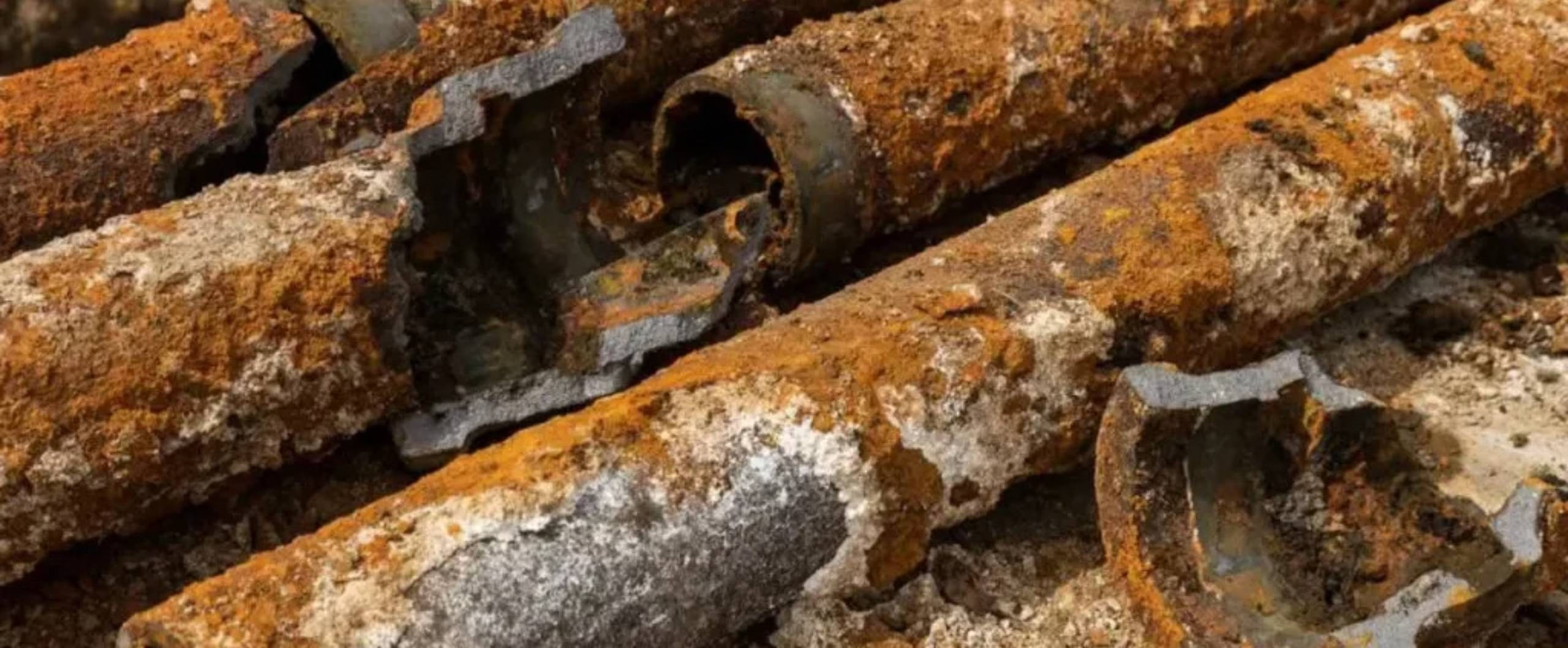
If you’re a homeowner with a property built before 1975 in Coral Gables or Boca Raton, you might just have a cast iron time bomb on your hands. The indicators are clear: gradual draining, slight sewer gas smell in the laundry room or bubbling in the toilets. However, the plumbing is not the issue. Instead, it is the cost that becomes the real nightmare. Now the question is, does insurance cover cast iron pipes?
The question of whether insurance covers cast iron pipe replacement is perhaps the most debated and litigated topic in Florida real estate today. For many, the answer is the difference between a minor deductible and a $50,000 renovation nightmare. This guide breaks down the “people-first” reality of insurance claims, what the fine print actually means, and how you can protect your “Florida Oasis.”
Key Takeaways
- Water damage is generally covered by standard homeowners’ insurance policies. They often exclude corrosion or “gradual wear”.
- Many policies cover the cost of “tearing out and replacing” the floor or cabinets required to reach the leak.
- Most Florida policies have sub-limits for water damage (often capping at $10,000), which may not cover all the costs of a complete pipe overhaul.
- The success of a claim is almost always dependent on the high-definition inspections by cameras and plumbing reports from professionals that show a sudden failure.
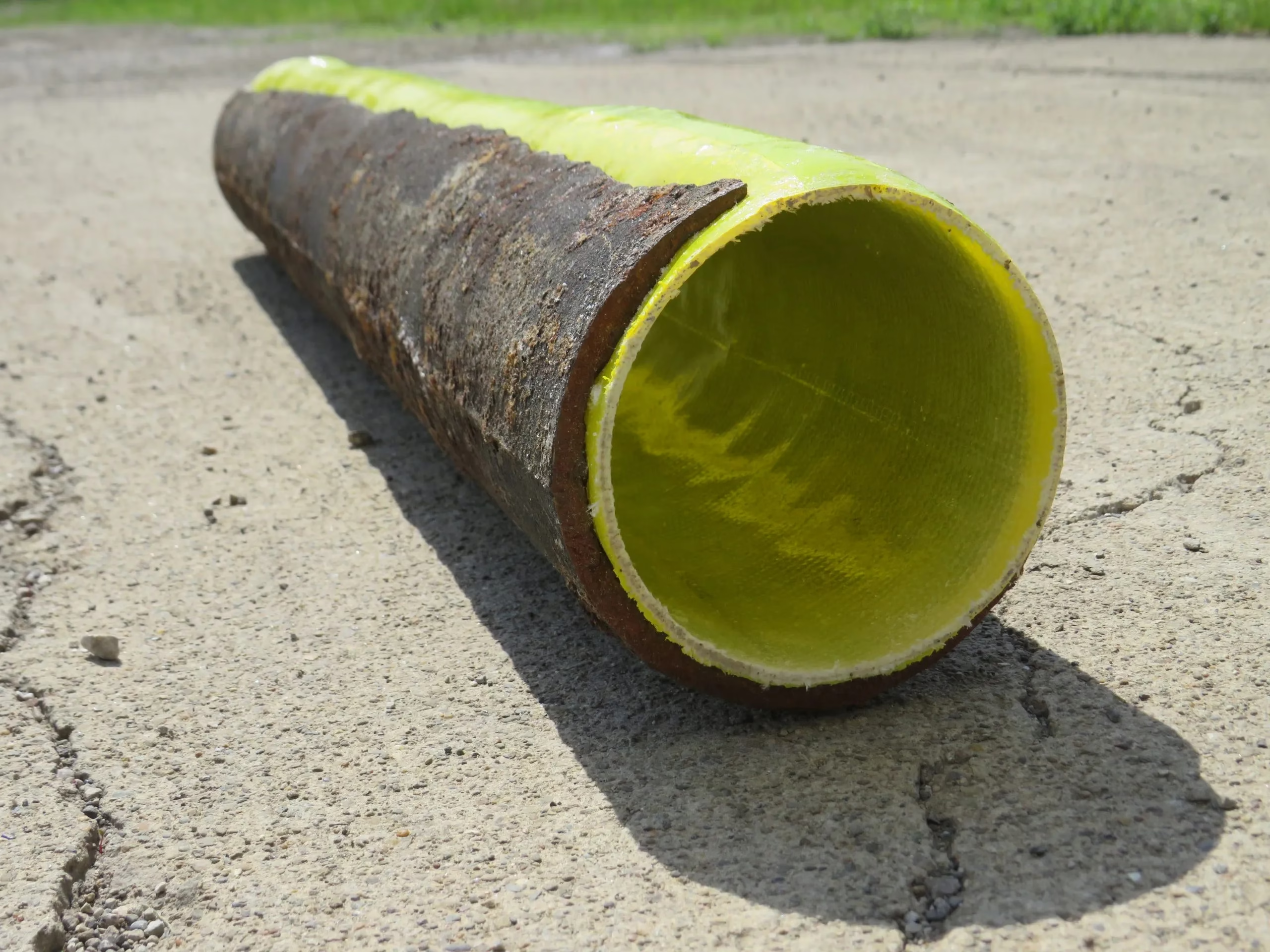
Why is the Cast Iron Crisis So Specific to Florida?
To understand the insurance battle, you first have to understand why our pipes fail so differently here than they do in the mountains or the desert. South Florida is a high-moisture, high-salt environment, and cast iron is a metal that loves to return to the earth.
How Does the Florida Water Table Accelerate Pipe Failure?
Our homes sit on a high water table and porous limestone. This means the exterior of your cast iron pipes is constantly bathed in moist, salty soil, while the interior is corroded by household chemicals and waste. This “double-sided” oxidation leads to “bottom rot,” where the bottom of your pipe completely disappears, allowing sewage to wash away the sand beneath your home’s foundation.
Why Are Insurance Companies Suddenly Changing Their Policies?
In the last decade, insurance companies in Florida have seen a massive spike in cast iron claims. Because the cost of “tearing out” a marble floor to fix a pipe can exceed $30,000, insurers have begun rewriting the rules.
So does insurance cover cast iron pipes? Many now include “age of plumbing” exclusions or require a separate premium (an endorsement) specifically for water damage caused by old pipes.
Does Insurance Cover Cast Iron Pipes?
The short, frustrating answer is: it depends on your specific policy language. Generally, insurance is designed to protect you from accidents, not aging.
What is the “Sudden & Accidental” Rule?
Generally speaking, insurance comes into play when the water pipe has broken and the living room is flooded as a result of that. In contrast, if the pipe was gradually leaking over a period of 15 years and had developed corrosion, an adjuster could possibly contend that it was “negligence” or “maintenance problems.” Therefore, it becomes very critical to establish that a particular defect, like a fissure or blockage, gave rise to the sudden problem.
What Does “Tear-Out” Coverage Mean For Me?
This is the most important clause for South Florida homeowners. Even if your insurance company refuses to pay for the $2,000 worth of new pipe, they may be legally obligated to pay for the access. In a slab-on-grade Florida home, “access” means jackhammering through your floors. If your policy includes tear-out coverage, the insurer may have to pay for the demolition and restoration of your floors, which is often 80% of the total project cost.
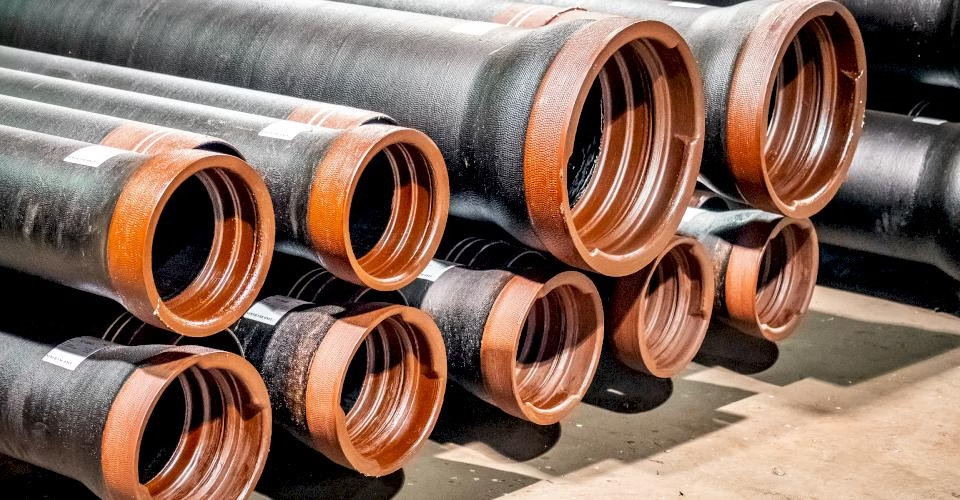
How Can Trenchless Pipe Lining Change the Insurance Conversation?
When insurance companies see a claim for $50,000 to dig up a house, they fight it. When they see a solution that fixes the problem for significantly less without destroying the home, the conversation changes.
Can I Use Insurance Money for Trenchless Pipe Lining?
Yes, in many cases. If an insurer agrees to pay for a “repair,” you can often apply those funds toward Trenchless Pipe Lining. Because this technology is less invasive, it actually reduces the “risk” for the insurance company in the future, as it creates a brand-new, jointless pipe that won’t leak again.
Why Is “No-Dig” Technology More Attractive to Insurers?
Traditional repair involves a massive liability: open trenches in a home can lead to mold, structural shifting, and weeks of hotel stays for the residents. Trenchless repairhappens in a day. By choosing a “no-dig” solution, you are often providing a more cost-effective “mitigation” of the damage, which insurance companies are legally required to favor.
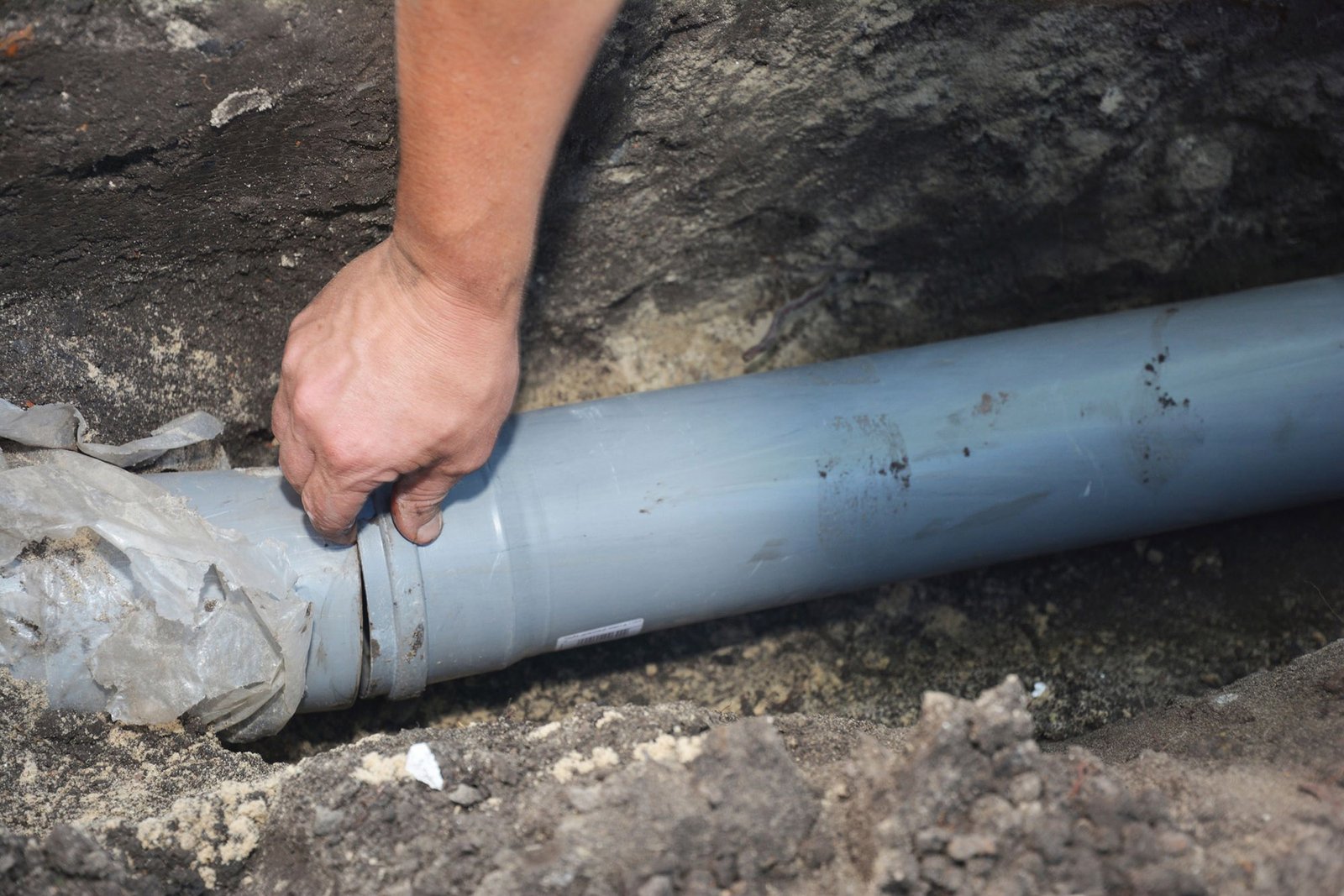
The Step-by-Step Guide to Navigating a Cast Iron Claim
If you suspect your pipes are failing, you shouldn’t just call your insurance agent immediately. You need a strategy that puts “human” evidence first.
- The Camera Inspection: Before filing a claim, have a specialized plumber perform a high-definition video inspection. This “evidence” is your best friend when dealing with an adjuster.
- Mitigation: You have a duty to prevent further damage. If your pipes are backing up, stop using the water and have the line cleared or “jetted” immediately.
- Review Your Dec-Page: Look at your “Declarations Page” for words like “Water Backup,” “Sump Overflow,” or “Seepage Exclusions.”
- Get a Detailed Estimate: Don’t just get a quote for “new pipes.” Get a quote that breaks down the cost of demolition, the cost of the pipe, and the cost of restoration.
Protecting Your Florida Legacy
Comprehending the insurance infrastructure, if you’re managing a current leak or looking ahead, is a must. Most probably, your house is the biggest possession you have. So, its “unseen plumbing” shouldn’t cause it to fail.
Does insurance cover cast iron pipes? Trenchless pipe lining, which is a modern solution, can close the gap between the insurance coverage and the actual requirements of your house to be safe, dry, and valuable for future generations.
Frequently Asked Questions
Will my insurance go up if I file a cast-iron pipe claim?
Florida law does not allow insurers to cancel your policy for a single claim. However, at the next renewal, you may notice a “rate increase”. The cost of a higher premium is typically a fraction of what you would have to pay for a pipe failure. The trade-off is between a small increase in premiums and a high one-time cost.
What if my policy has a $10,000 limit for water damage?
Most Florida policies are “capped” for water damage. However, this cap is often applied to remediation (drying the house out) and not the tear-out. Have an expert look over your policy and determine if the cost to access the pipes is covered under a separate, non-capped category. These definitions could mean the difference between an approved claim and one that is denied.
Can I get insurance on a home with original cast iron pipes?
It is becoming increasingly difficult to find “full coverage” for homes with cast iron, as many insurers now require a 4-point inspection before issuing a policy. If your pipes are over 40 years old, the insurer may exclude water damage entirely unless you show proof that the system has been updated or lined. This makes Trenchless Pipe Lining an excellent investment for maintaining your home’s insurability.
Does insurance cover the cost of “upgrading” to Trenchless Pipe Lining?
Insurance is designed to return your home to its “pre-loss condition,” which means they technically only owe you for a basic repair. However, because Trenchless Pipe Lining is often cheaper than the total cost of digging and floor replacement, most adjusters are happy to settle for the cost of the lining. It effectively provides you with a superior, 50-year solution for the price the insurer was going to pay for a messy demolition.